

This is less a display of “essential books” than a route for enlarging a studio question. It moves between drawing, body, home, street, city and critique; every title is left with a short evaluation and a reading question.
Method
There is no universal best 25. The five blocks move through foundations and representation, sensory space, city and public life, theory and critique, and Turkey or architecture’s surroundings. Goodreads values are a dated snapshot from 15 August 2026; StoryGraph and LibraryThing were unavailable on that date. Reader scores are not equivalent to disciplinary importance and are not conflated with professional or bibliographic sources.
Ernst Neufert’s Architects’ Data is useful as a quick reference for dimensions and programmes; it is not a substitute for current regulations, local standards or professional review. Where Turkish editions or publication years vary, I have deliberately not invented edition details.
Foundations and representation

01Architecture: Form, Space, and Order
Francis D. K. Ching · 1979
It turns relationships between form, space and order into a legible foundational language of drawings and diagrams.
What to read for Question the diagrams’ neutrality: what order do they reveal, and what do they leave out?
Open Goodreads profile ↗ · Reader score is not a measure of disciplinary importance.
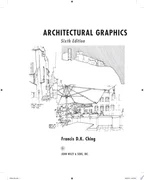
02Architectural Graphics
Francis D. K. Ching · 1975
It treats line weight, projection and graphic conventions as carriers of design thought.
What to read for Test a drawing as a tool for deciding and persuading, not only representing.
Open Goodreads profile ↗ · Reader score is not a measure of disciplinary importance.

03Architects' Data
Ernst Neufert · 1936 / current editions
It offers a quick shelf of dimensions, programmes and building elements, showing how standards enter design.
What to read for Use the tables as starting data; they do not replace current regulations, local standards or professional review.
Open Goodreads profile ↗ · Reader score is not a measure of disciplinary importance.
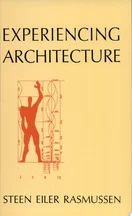
04Experiencing Architecture
Steen Eiler Rasmussen · 1959
It frames architecture as an art experienced through movement, sound, scale and material, not sight alone.
What to read for Read a building while moving through it, with time and body, rather than as a photograph.
Open Goodreads profile ↗ · Reader score is not a measure of disciplinary importance.

05The Eyes of the Skin
Juhani Pallasmaa · 1996
Against visually centred education, it recalls touch, smell, sound and bodily memory.
What to read for Explore how sensory plurality can enter design decisions without becoming nostalgia.
Open Goodreads profile ↗ · Reader score is not a measure of disciplinary importance.
Sensory space

06Thinking Architecture
Peter Zumthor · 1998
Atmosphere, material and memory form a field of thought that precedes, but does not escape, technical precision.
What to read for Think about a material’s emotional effect alongside detail and construction reality.
Open Goodreads profile ↗ · Edition-specific Goodreads profile; reader score is not a measure of disciplinary importance.

07Atmospheres
Peter Zumthor · 2006
It describes atmosphere through the compact interplay of light, sound, proximity and material.
What to read for Write atmosphere as a producible, discussable set of relations rather than a vague adjective.
Open Goodreads profile ↗ · Reader score is not a measure of disciplinary importance.

08In Praise of Shadows
Jun'ichirō Tanizaki · 1933
Through shadow, patina and slowness, it considers the cultural and sensory value of material.
What to read for Compare preferences for light and surface without reducing the text to an East/West cliché.
Open Goodreads profile ↗ · Reader score is not a measure of disciplinary importance.

09Architecture Depends
Jeremy Till · 2009
It positions architecture as a practice dependent on society, labour, economy and uncertainty, not an autonomous object.
What to read for Read dependence as architecture’s real context and responsibility, not as weakness.
Open Goodreads profile ↗ · Reader score is not a measure of disciplinary importance.
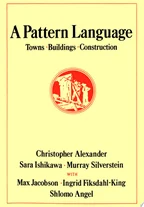
10A Pattern Language
Christopher Alexander, Sara Ishikawa & Murray Silverstein · 1977
It turns spatial knowledge into a repeatable yet adaptable language through a catalogue of patterns.
What to read for Rebuild the relation behind a pattern in your context instead of copying a recipe.
Open Goodreads profile ↗ · Reader score is not a measure of disciplinary importance.
City and public life

11The Death and Life of Great American Cities
Jane Jacobs · 1961
It defends street life, mixed use and everyday observation through lived urban knowledge rather than abstract planning.
What to read for Connect “eyes on the street” to diversity and encounter, not only a security slogan.
Open Goodreads profile ↗ · Reader score is not a measure of disciplinary importance.

12The Image of the City
Kevin Lynch · 1960
It turns the city image into an analysable mental map of paths, edges, districts, nodes and landmarks.
What to read for Ask whose experience the map centres, not only whether the city is legible.
Open Goodreads profile ↗ · Reader score is not a measure of disciplinary importance.
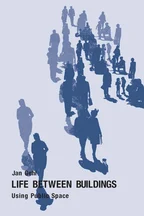
13Life Between Buildings
Jan Gehl · 1971
It studies public life through possibilities for passing, staying and meeting between buildings.
What to read for Observe sitting, walking and waiting as primary design measures, not leftover programme.
Open Goodreads profile ↗ · Reader score is not a measure of disciplinary importance.
14Cities for People
Jan Gehl · 2010
It argues for measuring urban design through pedestrians, cyclists and everyday users.
What to read for Define human scale through specific speeds, bodies and access conditions rather than a universal slogan.
Open Goodreads profile ↗ · Reader score is not a measure of disciplinary importance.
15The Architecture of the City
Aldo Rossi · 1966
It discusses type, collective memory and permanence on a plane longer-lived than the architectural object.
What to read for Ask which histories the monument and urban artefact stabilize, and which they hide.
Open Goodreads profile ↗ · Reader score is not a measure of disciplinary importance.
Theory and critique
16Complexity and Contradiction in Architecture
Robert Venturi · 1966
Against purity and single meaning, it defends complexity, contradiction and multiple readings.
What to read for Test contradiction in programme and use, not only as a formal game.
Open Goodreads profile ↗ · Reader score is not a measure of disciplinary importance.
17Learning from Las Vegas
Robert Venturi, Denise Scott Brown & Steven Izenour · 1972
It treats ordinary commercial landscapes as architectural knowledge read through signs, speed and consumption.
What to read for Make “learning from” an analysis of overlooked urban communication, not an aesthetic copy.
Open Goodreads profile ↗ · Reader score is not a measure of disciplinary importance.

18Delirious New York
Rem Koolhaas · 1978
It rewrites Manhattan as an architectural manifesto produced by density, programme and cultural fantasy.
What to read for Think of density as the capacity for conflicting programmes to coexist, not simply more buildings.
Open Goodreads profile ↗ · Reader score is not a measure of disciplinary importance.

19Modern Architecture: A Critical History
Kenneth Frampton · 1980
It frames modern architectural history through tensions between technique, geography, culture and critique rather than progress.
What to read for Compare what each period made possible and impossible instead of memorizing chronology.
Open Goodreads profile ↗ · Reader score is not a measure of disciplinary importance.

20The Production of Space
Henri Lefebvre · 1974
It treats space as produced by social relations, representations and everyday practices, not a ready-made container.
What to read for Test the gap between perceived, conceived and lived space on your studio project.
Open Goodreads profile ↗ · Reader score is not a measure of disciplinary importance.
Turkey and architecture’s surroundings

21Invisible Cities
Italo Calvino · 1972
It is a literary atlas multiplying cities through memory, desire, language and imagination rather than geography.
What to read for Read each city as a narrative rule, and ask what remains invisible.
Open Goodreads profile ↗ · Reader score is not a measure of disciplinary importance.
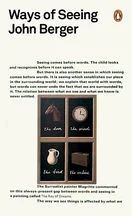
22Ways of Seeing
John Berger · 1972
It shows that seeing is not innocent, shaped by painting, advertising, ownership and the representation of bodies.
What to read for Study whom an architectural image positions as viewer, owner and object.
Open Goodreads profile ↗ · Reader score is not a measure of disciplinary importance.

23Mimarlık Kavramları
Doğan Kuban · 1980 · 19th edition
It opens a way to think through architectural concepts in Turkish, with history, construction and culture in view.
What to read for Look for how concepts take shape in Turkey’s building and urban experience rather than memorizing definitions.
Open Goodreads profile ↗ · Reader score is not a measure of disciplinary importance.

24Türk Evi
Cengiz Bektaş · 1996 · 7th edition
It discusses traditional dwellings through climate, everyday life, material and regional variation.
What to read for Read “the Turkish house” as plural regional practice, not one fixed type.
Open Goodreads profile ↗ · Reader score is not a measure of disciplinary importance.

25Yıkarak Yapmak: Anarşist Bir Mimarlık Kuramı İçin Altlık
Uğur Tanyeli · 2017 · 1st edition
It reopens the limits of the discipline, demolition and institutional assumptions on a critical ground.
What to read for Treat unbuilding as a method for questioning systems of knowledge and power, not only a physical act.
Open Goodreads profile ↗ · Reader score is not a measure of disciplinary importance.
Source records
Goodreads values are a dated snapshot from 15 August 2026. StoryGraph and LibraryThing were unavailable on that date; no cross-service average is used.
- Architecture: Form, Space, and Order — Goodreads.
- Architectural Graphics — Goodreads.
- Architects’ Data — Goodreads.
- Experiencing Architecture — Goodreads.
- The Eyes of the Skin — Goodreads.
- Thinking Architecture — Goodreads.
- Atmospheres — Goodreads.
- In Praise of Shadows — Goodreads.
- Architecture Depends — Goodreads.
- A Pattern Language — Goodreads.
- The Death and Life of Great American Cities — Goodreads.
- The Image of the City — Goodreads.
- Life Between Buildings — Goodreads.
- Cities for People — Goodreads.
- The Architecture of the City — Goodreads.
- Complexity and Contradiction in Architecture — Goodreads.
- Learning from Las Vegas — Goodreads.
- Delirious New York — Goodreads.
- Modern Architecture: A Critical History — Goodreads.
- The Production of Space — Goodreads.
- Invisible Cities — Goodreads.
- Ways of Seeing — Goodreads.
- Mimarlık Kavramları — Goodreads.
- Türk Evi — Goodreads.
- Yıkarak Yapmak: Anarşist Bir Mimarlık Kuramı İçin Altlık — Goodreads.
A reading note
Finishing every book from cover to cover is not the only method. Bring one chapter into a studio project, a field note or the margin of a plan; see what changes in drawing and lived experience.
Continue with the 25-film selection, 25-series selection and studio playlist.